Local SEO for Doctors

Be Found by Patients Searching for Care Near You

When patients search for a dentist, dermatologist, or specialist near them, they turn to Google. If your practice isn’t showing up in local results and Google Maps, you’re losing high-intent patients to competitors. Our Local SEO strategies position your practice at the top of local search results — right when patients are ready to book.
★★★★★ Rated by healthcare & dental practices nationwide
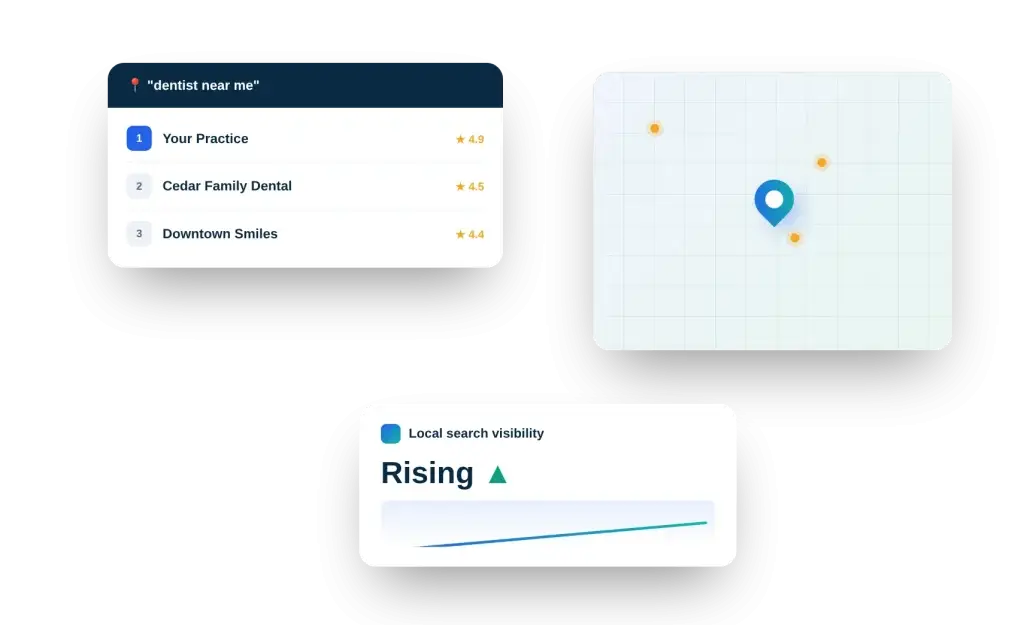
Local SEO illustration: dental practice ranking first in the Google map pack for dentist near me
Dr. James Gelfand, co-founder and dentist at DoctorsInternet.comDr. Joshua Gindea, co-founder and dentist at DoctorsInternet.com

Founded by dentists Dr. James Gelfand & Dr. Joshua Gindea — marketing built by people who understand healthcare from the inside. Meet the founders →
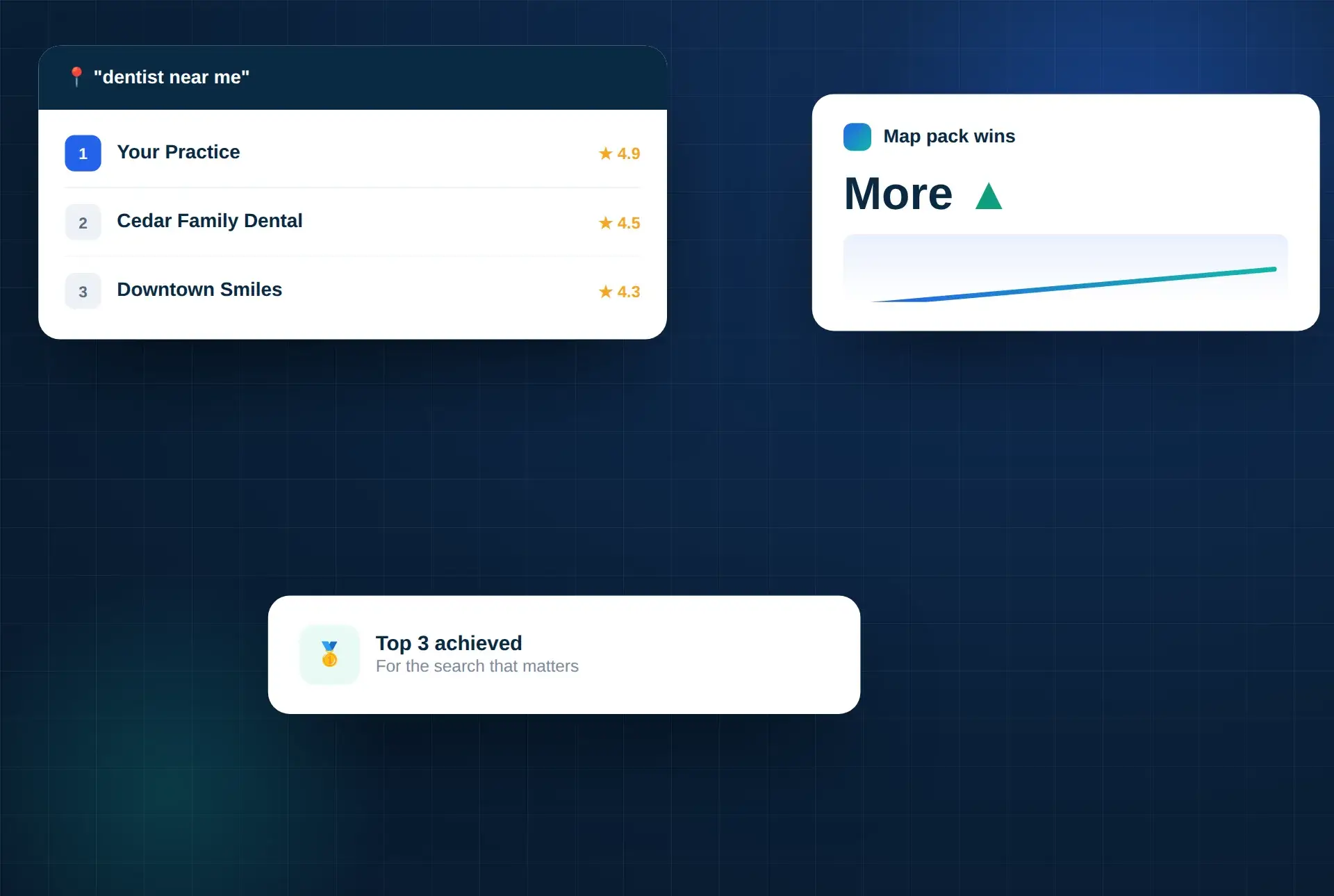
Healthcare local SEO illustration — design panel 1 by DoctorsInternet

Your Next Patient Is Searching Right Now

What Is Local SEO for Doctors?

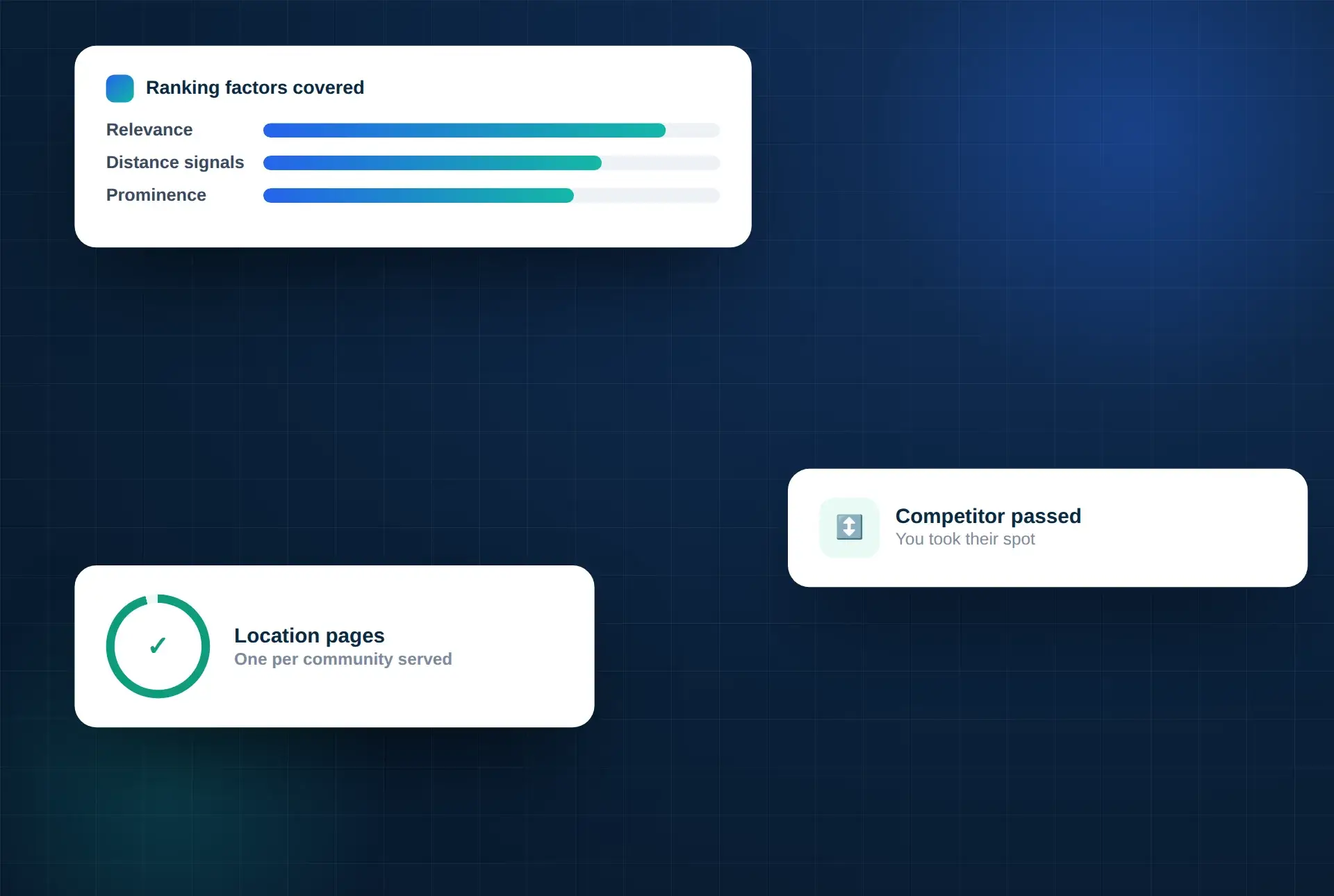
Local SEO for doctors is the practice of optimizing a medical or dental practice’s online presence so it appears in local search results — Google’s Map Pack, Business Profile listings, and location-based organic rankings — when nearby patients search for care. It works by strengthening the three signals Google uses to rank local practices: relevance (accurate categories, services, and location-specific pages), distance (proximity to the searcher), and prominence (reviews, citations, and consistent business information across the web). For healthcare practices, effective local SEO means appearing at the top when patients search terms like “dentist near me,” “dermatologist in your city,” or “emergency dental care open now” — the moment they are ready to book.

Drive local patient growth

How Local SEO Determines Which Practice Patients Call

When patients search for nearby care, they choose from the first few results and rarely scroll further. If your practice isn’t ranking at the top of local search and Google Maps, those patients are calling your competitors. Our Local SEO strategies put you where patients are looking, drive more appointment requests, and make your practice the obvious choice.
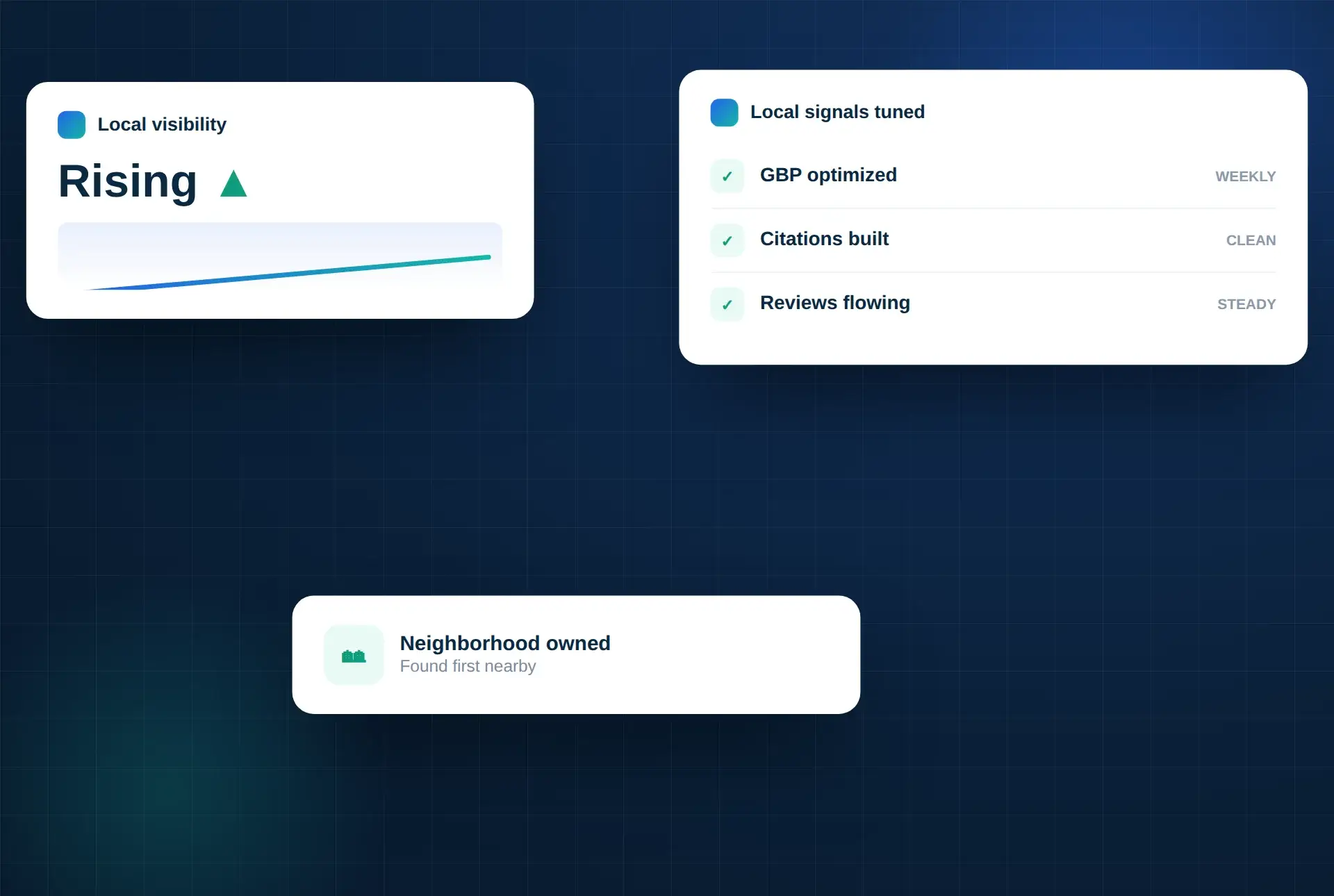
Healthcare local SEO illustration — design panel 2 by DoctorsInternet

Patients nearby are searching right now

Rank Where It Matters and Turn Local Searches Into New Patient Calls

Dominate the Map Results in Your Area

We fully optimize and actively manage your Google Business Profile — keeping it accurate, populated, and positioned to rank in the map pack where most patients click.

Rank for the Searches That Lead to New Patient Calls

City-specific service pages and carefully optimized metadata ensure your practice shows up when nearby patients search for exactly what you offer.

Build the Review Presence That Makes Patients Choose You

We build your directory presence and implement review generation strategies that signal trustworthiness to both patients and search algorithms.

Patients nearby are searching right now

How We Put Your Practice in Front of Local Patients Ready to Book

Get Found at the Top of Local Search

We optimize your business categories, service area details, metadata, and structured data to maximize your ranking in Google’s local map pack—putting your practice in front of high-intent patients who are ready to book.
Healthcare local SEO illustration — design panel 3 by DoctorsInternet
Healthcare local SEO illustration — design panel 4 by DoctorsInternet

Rank for What Patients Near You Search

We research the exact terms local patients use when looking for your services and build optimized content around those queries — so your practice appears when it matters most.

Earn the Trust of Search Engines

Reviews and consistent citations send powerful credibility signals to Google — strengthening your rankings and giving patients the confidence to choose you.
Healthcare local SEO illustration — design panel 5 by DoctorsInternet

Frequently Asked Questions

What is Local SEO?
Local SEO is the process of optimizing a business’s online presence to rank in geographically based search results. For a medical or dental practice, that means appearing in Google’s Map Pack, Google Business Profile, and organic results when nearby patients search for care. It relies on three ranking signals: relevance (how well your profile and pages match the search), distance (proximity to the patient), and prominence (reviews, citations, and reputation). Unlike broad SEO, it targets patients in your service area who are ready to book.
Most patients choosing a healthcare provider start with a local search and select from the first few results, rarely scrolling past the Map Pack. A practice that doesn’t appear there loses high-intent patients to competitors who do — regardless of clinical quality. Local SEO makes your practice visible at the exact moment a nearby patient is searching for the care you provide, capturing appointment requests that would otherwise go elsewhere. For most practices, local search is the single largest source of new-patient discovery.
Regular (organic) SEO aims to rank a website for broad, non-location-specific queries nationally. Local SEO focuses on visibility for searches tied to a specific area, and it involves ranking factors traditional SEO doesn’t — such as your Google Business Profile, Map Pack placement, local citations, proximity to the searcher, and review signals. A practice can rank well locally without ranking nationally, and vice versa. For providers who serve patients in a defined geographic area, local SEO drives far more qualified traffic than general SEO.
Local SEO is a compounding investment rather than an instant switch. Most practices begin seeing measurable improvements in visibility and Map Pack placement within a few months, with rankings and call volume strengthening as reviews, citations, and authority accumulate. Timeframes vary based on competition in your area, the current state of your Google Business Profile, and how established your online presence is. Established practices in less competitive markets tend to see movement faster than new practices in dense metro areas.
A complete local SEO program for a healthcare practice typically includes Google Business Profile optimization and management, city- and service-specific landing pages, on-page metadata and structured data, local citation and directory consistency, and a review generation strategy. Together these strengthen the relevance, distance, and prominence signals Google uses to rank local practices. Ongoing management matters because local rankings shift with competitor activity, review velocity, and algorithm updates — it is a continuous process, not a one-time setup.
Yes. City- and neighborhood-specific service pages are a core part of local SEO because they let a practice rank for location-based searches like “pediatric dentist in your city.” These pages target the exact terms patients in each area use, paired with optimized metadata and structured data so search engines and AI answer engines can clearly connect your practice to the locations you serve. Practices with multiple locations benefit most, since each location can rank independently in its own local market.
Yes — significantly. Reviews are one of the strongest local ranking signals. Google weighs review quantity, average rating, freshness, and keyword relevance when deciding which practices to show in the Map Pack. Reviews also influence patient choice directly: most patients read reviews before booking and favor practices with recent, positive feedback. Consistent review generation strengthens both your ranking and your conversion rate, making it one of the highest-leverage activities in local SEO for healthcare.
Yes. Local rankings are determined by relevance, proximity, and prominence — not by the size of the practice or its marketing budget. A smaller, well-optimized practice with an accurate Google Business Profile, strong recent reviews, and location-specific pages can consistently outrank larger competitors who neglect their local signals. Because ranking is proximity-weighted, a focused local strategy often lets an independent practice dominate its immediate service area even against regional groups or DSOs.
Keyword targeting in local SEO starts with the actual terms patients use when searching for care in a specific area — combinations of service, condition, and location such as “emergency dentist your city” or “Invisalign near me.” These are identified through keyword research tools, Google Business Profile insights, competitor analysis, and search-intent patterns. The goal is to prioritize high-intent, bookable searches over broad informational terms, so the traffic you attract is patients ready to schedule rather than casual browsers.
Typical outcomes include stronger placement in Google’s Map Pack and local organic results, greater visibility for high-intent “near me” and city-specific searches, and a steady increase in qualified traffic, calls, and appointment requests over time. Because local SEO compounds, results tend to strengthen month over month as reviews and authority build. The most meaningful metric is new-patient calls and form submissions attributable to local search — visibility only matters when it converts into booked appointments.

What happens next

1

Book a free demo

A quick, no-pressure walkthrough — see real sites we've built for practices like yours.

2

Get your practice's plan

We map your specialty, market, and goals into a clear growth plan.

3

Launch & grow

Your new site goes live — wired to booking, reviews, and local search.

Your Practice's Digital Growth Partner

Let Us Help Your Practice Grow Online

At DoctorsInternet.com, we build the digital foundation healthcare providers need to attract more patients and grow their practice. Fill out the form and a representative will reach out shortly — or call us at (800) 416-5235.

Get a Free DemoCall (800) 416-5235